

- Resources
Innovative Thinking


Backlinks still matter, and they matter rather less than the monthly packages being sold to Malaysian SMEs imply. Google’s own local-ranking documentation names links among the things that make a business prominent, so the signal is real. The backlinks Malaysia businesses can actually earn, though — an association member listing, a supplier’s dealer page, a line in a trade paper — are far fewer than any package promises, and worth more.
The reason to read Google’s rules before buying is that most of what gets sold as link building falls inside Google’s published definition of link spam, which names buying links, low-quality directory links and paid articles outright. It is short, specific and free to read.
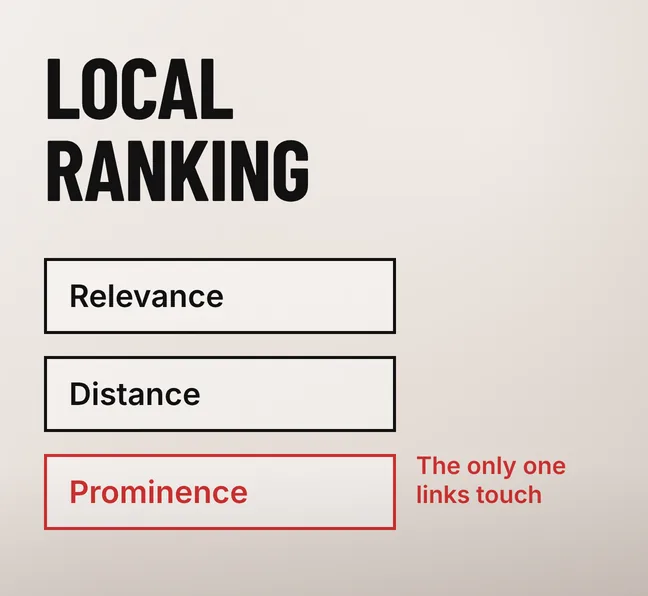
Yes, as one signal among several rather than the deciding one. For a local business Google is explicit about where links sit: its Business Profile documentation names relevance, distance and prominence as the three local ranking factors, and places links inside prominence. A page still has to answer the search before any link helps it.
Google’s guidance on improving your local ranking defines prominence as “how well-known a business is” and says the factor is “also based on info like how many websites link to your business and how many reviews you have.” The other two are measured without reference to links at all: relevance is “how well a Business Profile matches what someone is searching for”, and distance is “how far each business is from the customer who’s searching.”
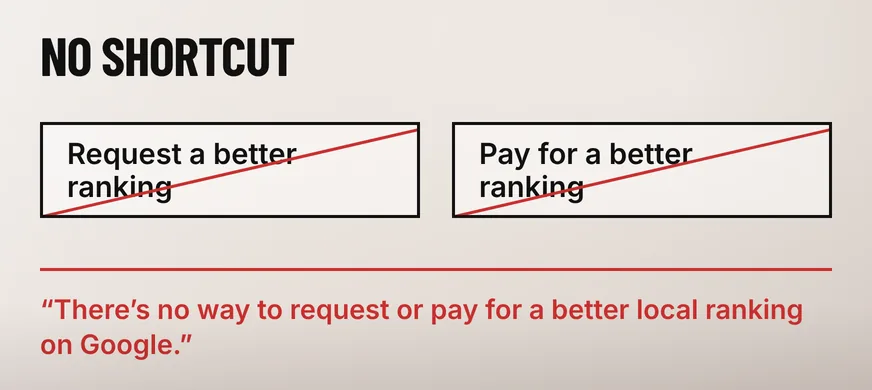
The same page closes the shortcut in one sentence: “There’s no way to request or pay for a better local ranking on Google.” That is worth holding onto when a proposal arrives priced per link.
Links are also the usual explanation for the thing business owners find hardest to accept, which is a competitor with an uglier, slower website sitting above them. An older domain that a decade of suppliers, associations and local papers have linked to carries authority a three-month-old page cannot buy its way to.
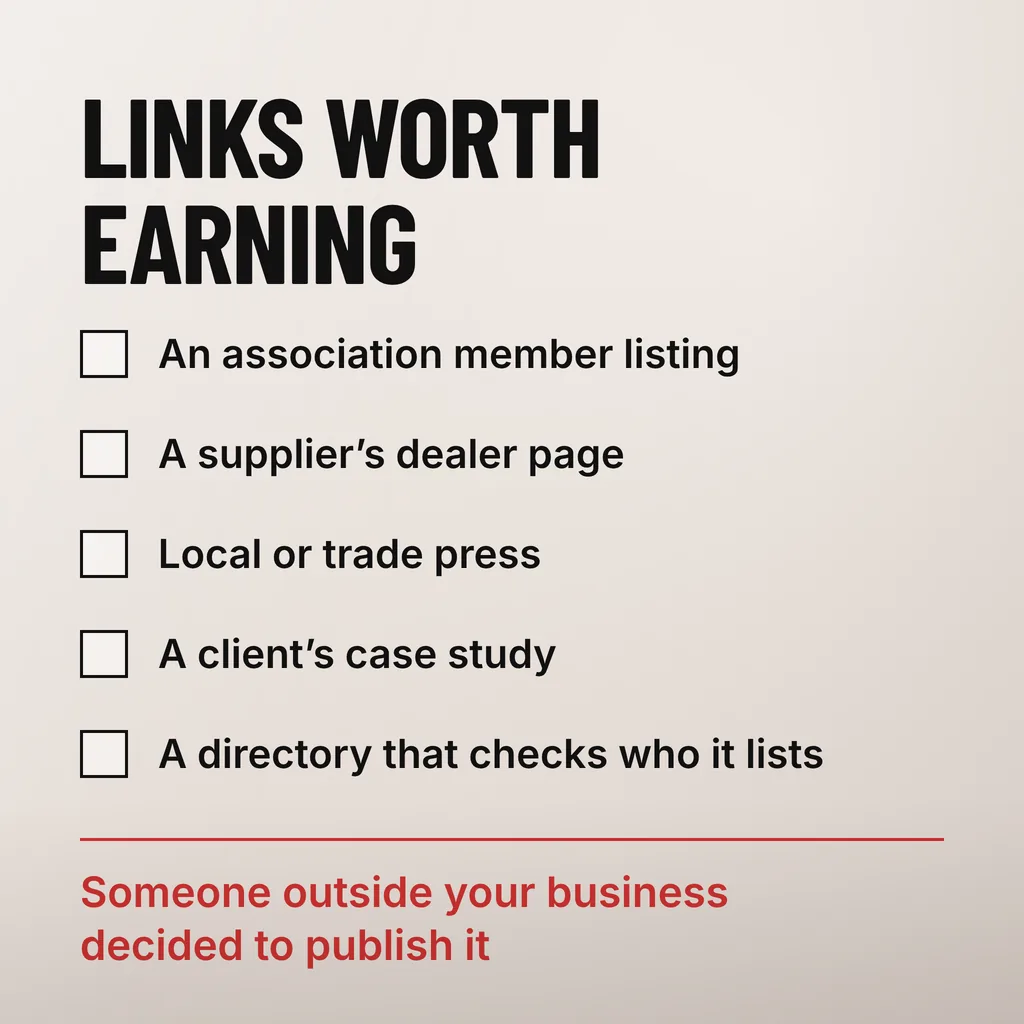
The ones some other organisation already has a reason to publish. A trade association member directory, a principal’s or supplier’s dealer page, a local or trade publication covering something you did, a client’s case study naming you, and a directory that verifies who it lists before listing them. Five realistic sources, all of them slow.
| Where the link comes from | What makes it count | How a Malaysian SME gets it |
|---|---|---|
| A trade or industry association member directory | It is published because your membership was checked, so it carries the same verification a buyer would do | Join, then complete the member profile properly with your registered name, SSM number and address |
| A principal’s or supplier’s dealer page | The manufacturer has a commercial reason to list you, which is exactly why it is hard to fake | Ask your distributor to add you to their where-to-buy or authorised-dealer page |
| Local news or a trade publication | Earned by something that happened, so it is editorial rather than placed | Give a journalist something specific: a figure, a finished project, a local first |
| A client’s or partner’s case study | A named business vouching for you in public, on their own domain | Agree it when the project is signed rather than a year after it finishes |
| A directory that checks who it lists | The check is the value; an open directory that lists anyone has none | Apply to the licensing body, chamber or register that covers your trade |
What all five have in common is that the decision to publish sat with somebody outside your business. That is also why none of them can be delivered in a bundle on a monthly retainer, and why a seller quoting a fixed number of links a month is not offering these.
Google calls it link spam, and defines it as “the practice of creating links to or from a site primarily for the purpose of manipulating search rankings.” The published list of examples covers most of what gets sold as link building, including bought links, link exchanges, paid articles and bulk directory submissions.
Read the Google Search spam policies once and the sales pitches become easy to classify. Under link spam Google names “exchanging money for links, or posts that contain links”, “exchanging goods or services for links”, “excessive link exchanges” and “creating low-value content primarily for the purposes of manipulating linking and ranking signals”. Two more land squarely on things sold here: “low-quality directory or bookmark site links” is the bulk-submission service pitched to small businesses, and “widely distributed links in the footers or templates of various sites” is the agency that leaves a credit link on every site it builds.
Sponsored coverage is not banned, and that distinction is where most confusion lives. Google says it “does understand that buying and selling links is a normal part of the economy of the web for advertising and sponsorship purposes” and that “it’s not a violation of our policies to have such links as long as they are qualified with a rel="nofollow" or rel="sponsored" attribute value”. What the policy forbids is the unmarked version: “advertorials or native advertising where payment is received for articles that include links that pass ranking credit”.
Google’s separate documentation on qualifying outbound links tells publishers to “mark links that are advertisements or paid placements (commonly called paid links) with the sponsored value”, and says links carrying those attributes “will generally not be followed”. So a paid link marked correctly passes no ranking credit and is simply advertising, and a paid link that does pass ranking credit is a policy violation. An agency selling do-follow placements is selling the second one, with the risk on your domain rather than theirs.
Usually nothing, until the day something does. Google Search Console’s Manual Actions report documents an action for unnatural inbound links, triggered when, in Google’s words, “Google has detected a pattern of unnatural, artificial, deceptive, or manipulative links pointing to your site”. The report states plainly that this “can result in some or all of your site getting a manual action”.
Cleaning that up is harder than buying it. Google’s documented steps are to download the list of links from Search Console, check it against the link spam policy, contact the sites and “ask that they either remove the links or prevent them from passing PageRank”, and only then “use the Disavow links tool in Search Console to disavow any links that you could not get removed.” Google also warns that “blindly adding all backlinks to the disavow file is not considered a good-faith effort”, so the shortcut through the cleanup is closed too.
The practical problem is ownership. A link bought through a reseller usually sits on a site you have no relationship with, often in a language and a country you have never traded in, and you cannot ask for its removal because you never knew who published it. A package that was cheap to buy becomes an untraceable liability, which is one item on a longer list of what a cheap SEO retainer actually delivers.
There is no honest price per link either. A link costs whatever it took to earn it — the membership, the project worth writing about, the data nobody else publishes — so a rate card per link only exists where the links are manufactured.
Spend the link budget on the two things that make a link possible. Something on your own site worth citing, and the handful of real relationships that already surround your business. Both take months rather than weeks, which is why packages sell, and both survive the next spam update.
Nobody can tell you, and a seller who quotes a number is describing their product rather than your market. Google publishes no threshold. In practice the pages winning a local query usually differ from yours more in what they answer and how fast they load than in how many links they hold, so compare those first and treat links as the last gap rather than the first.
Some are. A directory that verifies who it lists — a licensing body, a chamber of commerce, an industry association register — is worth the application, because the verification is the value. Google’s spam policies name “low-quality directory or bookmark site links” as link spam, which covers the open directories that list anyone who fills in a form. If you could add a competitor to it in two minutes, so can everyone else.
Usually no. Google reserves the disavow tool for links you could not get removed after trying, and warns that adding every backlink to the file is not treated as a good-faith effort. Unless you have a manual action in Search Console, or you know a previous agency bought links on your behalf, leave the file empty and spend the time on the pages themselves.
We treat links as the last item on a search visibility list rather than the first, because a page that answers nothing gains little from being linked to. Our SEO service starts with what the pages say and how they are found, then looks at which real relationships around the business are already linkable. If you want one thing to do this week, open the links report in Search Console and check whether the pages those links point at still exist.