


eCommerce Website Development
Service Overview
We plan and build online stores for Malaysian businesses on two platforms: WordPress with WooCommerce, and Shopify. Before anything is built, we help you choose the one that suits how your business sells, who will run the store, and what you are prepared to pay each month to keep it running.
Every quotation is written against a scope you approve, and it lists separately what is not part of our fee: hosting, domains, platform plans, paid themes, apps and plugins, payment processing, and any support after launch.
What a Project Can Include
Depending on the scope you approve, a store project can include:
- Platform advice before the quote
- Responsive storefront design
- Products, categories and variants
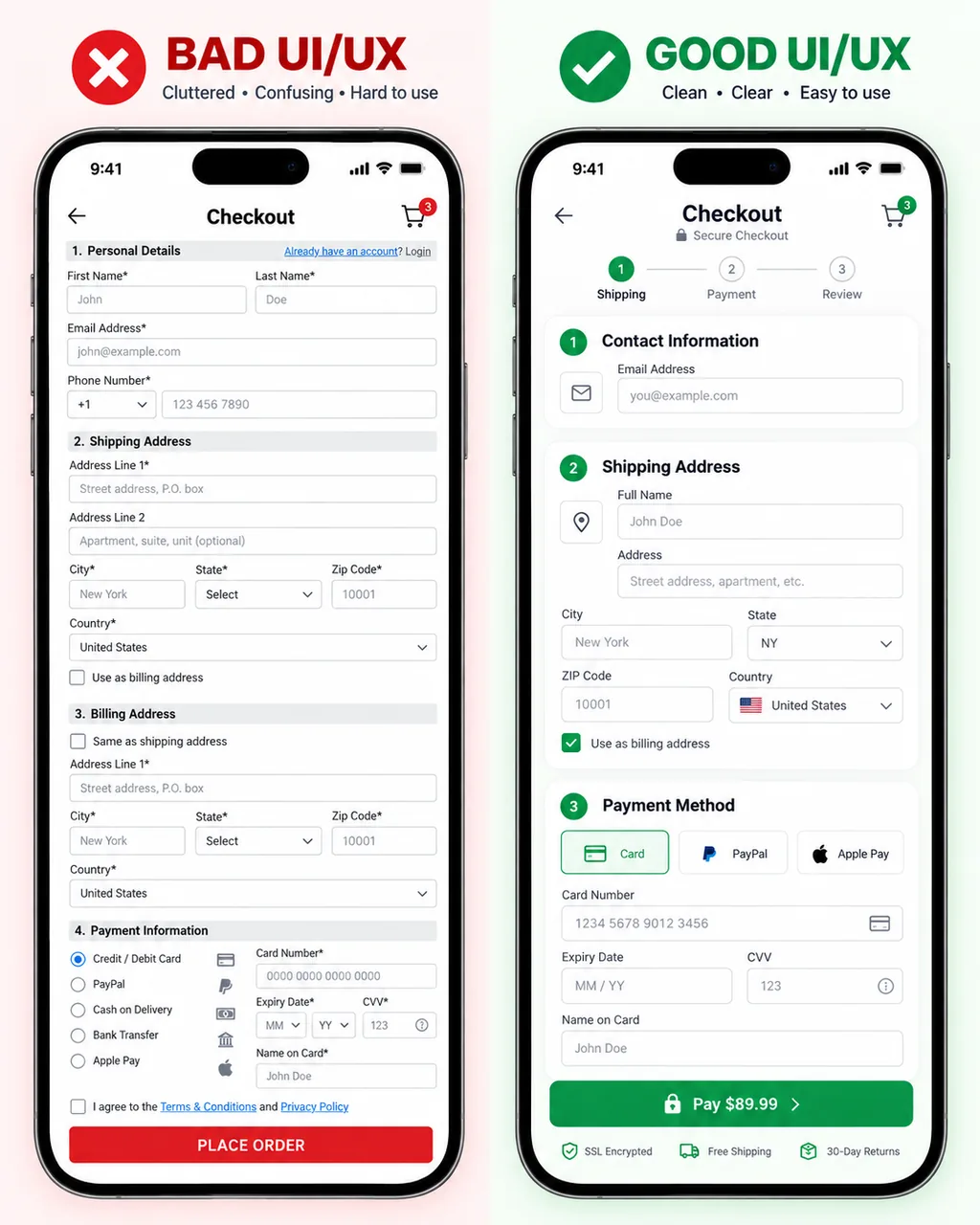
- Cart and checkout set-up
- Payment and shipping set-up
- Technical SEO and analytics basics
- Training and handover
Is an online store project right for your business?
These are the situations we hear most often. If one of them sounds like yours, an online store project is worth scoping.
Selling beyond marketplaces
You sell on Shopee or Lazada and want a store of your own as well, with your brand, your product details and your customer list. Why a website and a marketplace do different jobs.
Orders by chat today
Orders come in by WhatsApp or Instagram messages, and keeping stock, payments and delivery in step by hand is taking too long.
A store that is hard to run
The current store works, but updating products, prices or shipping is slow, plugins conflict, or nobody is sure how it was built.
A catalogue with variants
Products in sizes, colours or bundles, with stock to track for each one, that a simple product page cannot hold.
Moving platforms
You are outgrowing your platform or paying for one that no longer suits you. When a platform move is worth it.
Not sure yet?
Start with a free website review and we will tell you whether a store, a revamp or neither is the next step.
Online stores on WordPress with WooCommerce
WooCommerce is a free, open-source plugin that turns a WordPress site into a store. It suits businesses that want the shop and the rest of their website in one system, on hosting they control.
Products and stock
Simple, variable, grouped and external products, with variations that each have their own price, SKU and stock. Stock levels, low-stock notices and backorders are part of the core plugin.
Cart and checkout
New stores use WooCommerce’s block-based cart and checkout. Extra checkout fields and some extensions need integration work, so we check compatibility before we promise a change.
Payments in Malaysia
WooPayments, WooCommerce’s own payment service, is not offered in Malaysia. The official Stripe extension works for Malaysian businesses for card payments; FPX online banking needs a Malaysian payment gateway plugin.
Shipping
Flat rate and free shipping by shipping zone are built in, and so is local pickup, set up as pickup locations. Courier rates and label printing come from extensions or your courier’s own plugin.
Running costs
The plugin is free. Hosting, the domain, any paid extensions or theme (renewed yearly or every two years; a lapsed one keeps working without updates or support) and payment fees are paid by you, separately from our project fee.
Upkeep
WordPress, WooCommerce, the theme and plugins all need regular updates and backups, which you can do in-house or through a maintenance plan.
Already on WooCommerce and planning a redesign? Read how to revamp a WooCommerce store without losing orders.
Online stores on Shopify
Shopify is a hosted platform: you pay a monthly plan and Shopify runs the software, hosting and platform security. It suits businesses that want to focus on selling rather than on looking after a server.
Plans
Shopify’s main online store plans are Basic, Grow, Advanced and Plus, with different staff accounts, fees and features. Prices are on Shopify’s pricing page (opens in a new tab) and change by region; they are paid to Shopify, not to us.
Payments in Malaysia
Shopify Payments is not available in Malaysia, so card and online payments go through a third-party provider. Shopify adds a transaction fee on those, lower on higher plans, but not on manual methods such as bank transfer or cash on delivery.
Checkout
Every plan can brand its checkout and use App Store apps that adjust discounts, payment options and delivery options. Adding custom features inside the information, shipping and payment steps needs Shopify Plus.
Products and variants
Collections, inventory and up to 2,048 variants per product, with up to three options such as size and colour. Some themes and apps still handle only 100, so we check yours.
Themes and apps
Free and paid themes, and an app store for features Shopify does not include. Apps are billed separately, some through Shopify and some directly by the app maker.
Domain
You can buy a domain through Shopify, though not every extension is sold there, or connect one you already own. A connected domain stays with your current registrar for renewal.
WooCommerce or Shopify: the main differences
Neither platform is better for every store. This is how they differ on the points that usually decide it.
| Topic | WordPress + WooCommerce | Shopify |
|---|---|---|
| Hosting | You choose and pay for WordPress hosting. Speed and uptime depend on that host. | Included in your Shopify plan. Shopify runs the platform. |
| Software cost | WooCommerce itself is free and open source. Paid extensions and themes are optional and renew yearly or every two years. | A monthly Shopify plan. Paid themes and apps are extra. |
| Payments in Malaysia | WooPayments is not offered in Malaysia. Cards can run through the official Stripe extension; FPX online banking needs a Malaysian gateway plugin. | Shopify Payments is not offered in Malaysia, so card and online payments go through a third-party provider. Shopify adds a transaction fee on those, but not on bank transfer or cash on delivery. |
| Changing the checkout | The block checkout can be extended with code and compatible extensions. Some extensions need integration work. | Every plan: checkout branding, Thank you page apps, and App Store apps for payment, delivery and discount rules. Shopify Plus: custom features inside the information, shipping and payment steps. |
| Products and variants | Simple, variable, grouped and external products, with stock control, in the core plugin. | Up to 2,048 variants and three options per product, though some themes and apps handle only 100. |
| Updates and upkeep | You (or a maintenance plan) keep WordPress, WooCommerce, the theme and plugins updated and backed up. | Shopify updates the platform. Your theme and apps still need checking after changes. |
| Content and blog | A full WordPress site around the store, with pages and articles in the same system. | Pages and a blog are built in. More complex content may need apps or theme work. |
| Often a good fit for | Stores that need the shop inside a content-rich site, unusual product rules, or full control of the code and hosting. | Stores that want the platform, security and hosting handled for them, and can work within Shopify’s checkout and app model. |
How we help you choose
We recommend a platform after a short conversation about how your business sells, not before. These are the questions that usually decide it.
Who will run the store?
If your team will add products and process orders every day, the admin they find easiest matters more than any feature list.
What must the checkout do?
Extra fields, delivery dates, B2B pricing or unusual rules can be simple on one platform and need custom work, or Shopify Plus, on the other.
What should it cost to run?
We list the monthly and yearly running costs of each option next to each other, so the cheaper build is not mistaken for the cheaper store.
What has to connect?
Accounting software, a POS, marketplaces, couriers or a CRM. We check that a supported connection exists before recommending either platform.
What a store project can include
Your quotation lists which of these are in your scope. Not every project needs all of them.
Storefront design
Home, category or collection, product, cart and account pages designed for phones first, using your brand, photography and product information.
Catalogue set-up
Products, categories or collections, variants and stock, entered by us or imported from a spreadsheet you supply.
Checkout, payments and shipping
Cart and checkout settings, supported payment providers and the shipping zones and rates you decide.
Technical SEO and analytics
Clean addresses, titles and descriptions, a sitemap, and analytics and Search Console set up in your name.
Migration from an existing store
Products and, where the platforms allow it, customers and orders, plus redirects from old addresses. We confirm what can move before quoting.
Training and handover
A walkthrough of everyday tasks, and every account and login in your business’s name.
Support after launch is optional and quoted separately. See website maintenance.
From first call to a working store
Six stages. Each one ends with something you can review and approve before the next begins.
Discovery
What you sell, how you sell it today, who runs the store, and what it must connect to.
Planning
Platform recommendation, written scope, running-cost list and a quotation for you to approve.
Design
Page designs for the storefront, product and checkout journey, reviewed on a phone as well as a desktop.
Development
The store built on a staging copy or a development store, with your products, payments in test mode and shipping rules.
Testing
Test orders through the payment and shipping options you use, email notifications, stock changes and a mobile walk-through.
Handover
Launch, redirects if addresses change, a training session and every login in your name.
What we need to quote your store
The more of this you can share, the more precise the quotation.
Your products
Roughly how many products, how many have variants, and a sample of your product data or spreadsheet.
Payments and shipping
The payment methods you want to offer, and how you charge for delivery and to where.
What it connects to
Any accounting, POS, marketplace, courier or CRM system the store must work with.
Your current site
The address and platform of any existing website or store, and what must carry over.
Content and photos
Whether product photos and descriptions are ready, or need to be produced.
Timing
Any launch date or campaign the store has to be ready for.
What is not part of the project fee
Our quotation covers the work we agree to do. These costs are paid by you, usually directly to the provider, and continue after launch.
Hosting and domain
WordPress hosting for WooCommerce, and the yearly domain renewal on either platform.
Shopify plan
The monthly or yearly plan, paid to Shopify, if you choose Shopify.
Themes, apps and plugins
Paid themes, Shopify apps and WooCommerce extensions, many of which renew monthly or yearly.
Payment processing
Fees charged by your payment provider on each sale, plus Shopify’s additional transaction fee on sales through a third-party provider.
Ongoing support
Updates, backups, fixes and changes after launch, if you choose a maintenance plan.
Marketing
Advertising, SEO and content are separate services, quoted only if you ask for them.
eCommerce website questions
Should our store be on WooCommerce or Shopify?
It depends on who will run the store day to day, how much control you need over checkout and hosting, and what each option costs to keep running. We go through those questions with you before quoting, then recommend one platform and explain why. If neither fits, we will say so.
How much does an eCommerce website cost?
The project fee depends on the scope: how many products and variants, how many custom page layouts, which payment and shipping methods, and what has to connect. Indicative ranges are on our pricing page. Running costs such as hosting, a Shopify plan, paid apps or plugins and payment fees are separate from the project fee.
Can you move our existing store to a new platform?
Often, yes, but not everything moves the same way. Products usually transfer by import. Customers, order history and product reviews can need separate tools or may not transfer at all, depending on the platforms involved. We check what your store holds and tell you what will and will not carry over before we quote.
Which payment methods can we accept?
That depends on the payment provider you sign up with and what it approves for your business, not only on the platform. Many Malaysian gateways offer cards and online banking such as FPX. We set up the providers that support your platform and your business.
Do we need ongoing support after launch?
A store has more moving parts than a brochure site: payments, stock, plugins or apps, and the checkout itself. Someone needs to check them regularly. You can do this in-house, or ask about our website maintenance plans. Ongoing support is optional and quoted separately.
Will the new store rank on Google?
No one can promise rankings. What we can do is set up the technical basics properly: clean product and category addresses, titles and descriptions, a sitemap, and redirects if addresses change. Ongoing SEO is a separate service.
Who owns the store when it is finished?
You do. The domain, the hosting or Shopify account, the payment provider account, and the theme, plugin or app subscriptions should all be in your business’s name. More on this in who actually owns your website.
Before you build or revamp a store
How We Work on Store Projects
<p>A store is a working system, not only a set of pages. These are the habits we bring to every store project.</p>
1. Platform advice before the quote
2. A written scope you approve
3. Running costs listed separately
4. Test orders before launch
5. Every account in your name