
- Resources
Innovative Thinking


The homepage vs landing page question has a short answer: send each ad to the page that answers the search behind it, and that is almost never the homepage. A paid click is not a browse. Someone typed what they wanted, read your ad and chose it over the others. Landing them on a menu asks them to look for it a second time, on a phone, having already told you exactly what they were after.
The longer answer matters more, because “landing page” does not have to mean a purpose-built campaign page. For most Malaysian SMEs the right destination already exists as a service page that was never built to receive traffic somebody paid for. Fixing that page usually beats building a separate one beside it.
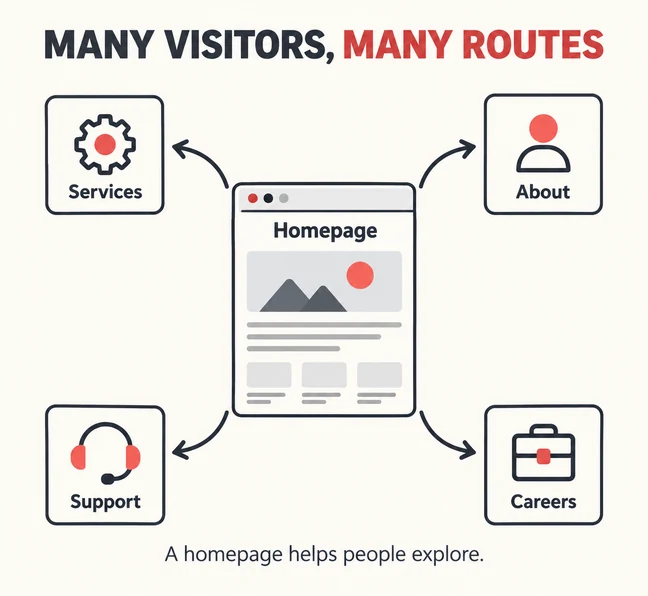
It is not a difference of design, platform or tooling. A homepage is a junction: it has to serve a first-time visitor, a returning customer, a supplier and someone looking for a job, and it does that by offering routes. Its job is finished when a visitor takes one.
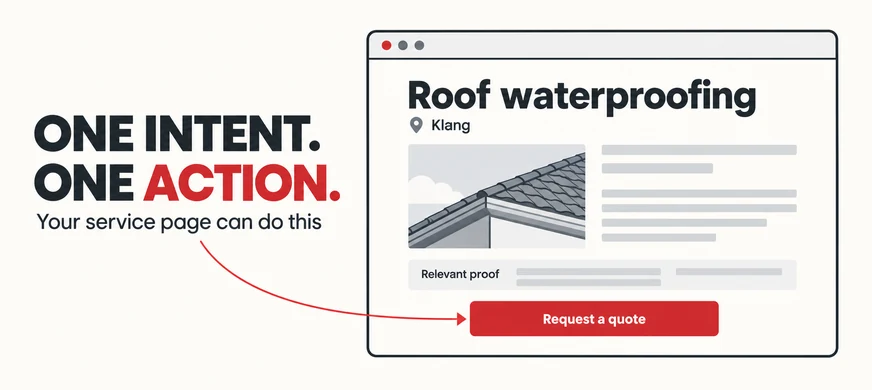
A landing page is a destination. It serves one intent, asks for one action, and treats anything that does not support it as a distraction. By that definition a service page you already have can be a landing page, and a page built in a campaign tool can fail to be one. The real question is not which type to build, but which page on your site is fit to receive a click you paid for.
A homepage succeeds when the visitor leaves it. A landing page succeeds when they do not.
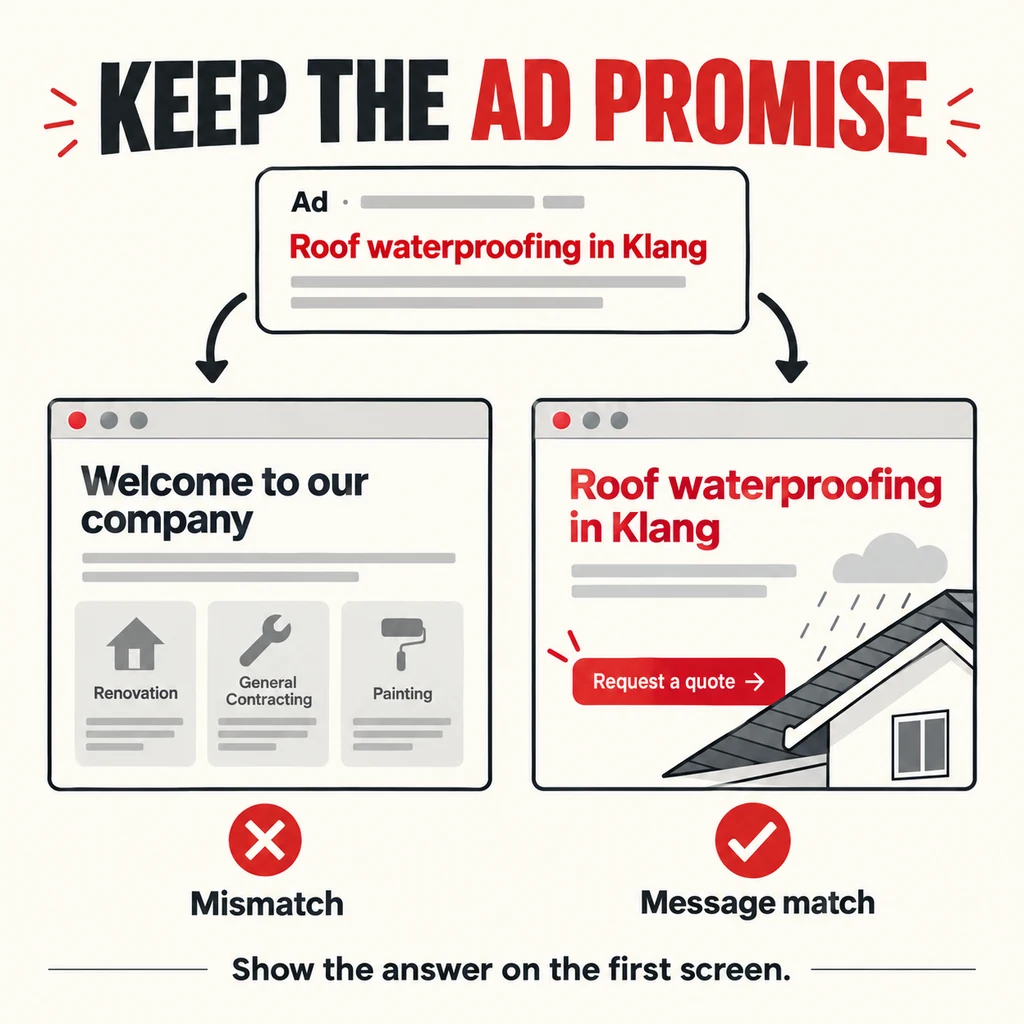
Because it opens with who you are, when the visitor asked whether you do one particular thing. Nielsen Norman Group’s analysis of how long users stay on web pages, drawn from Microsoft Research data covering 205,873 pages, found that the decision to stay or go is made in the first ten seconds — so a page has about that long to communicate its value proposition. Treat that as directional, since it covers web pages in general rather than paid arrivals; someone who arrived from an ad is colder still, with the back button one tap away.
Ten seconds is not long enough to scroll past a hero slider, scan six service tiles and work out which one matches the ad. Every extra route on the page is another way to not do the thing you were paying for.
It shows up in cost, not only in enquiries. Google lists the quality of your ad and landing page among the factors that decide Ad Rank, so the destination affects what a click costs and whether the ad appears at all. If a campaign is already spending without result, our article on the website problems behind Google Ads that do not convert covers the page itself.
Sometimes it genuinely is, and moving traffic off it would make things worse.
One test settles most cases. Imagine deleting every link on the page except one. If it would still deliver what the ad promised, it can take the traffic. If it collapses into a page about your company, it cannot.
This is newer than most advice about it. Google Ads has a Final URL expansion setting that swaps the URL you entered for a different page on your site when it judges that a better match for the search. Google says it “will only send traffic to URLs that are query relevant and themed to your ad group”, and that it is turned on by default when you opt in to AI Max settings. It can be switched off, and URL inclusions and exclusions steer it.
The practical consequence: your whole site is now a list of candidate landing pages. The promotion page from two years ago, the location page nobody finished, the careers page — any of them can become the destination for a click you paid for. Set the exclusions before the campaign runs, not after the first odd-looking report.
Google also sets a floor for wherever the click lands. Its destination requirements expect a page that works on common browsers and devices, does not return an HTTP error and is not unnecessarily difficult to navigate. Those are grounds for disapproval, not advice.
Google’s own instruction is plainer than most agency advice: give people what they are looking for, and keep messaging consistent from ad to landing page. In practice that means six things.
The same qualities turn organic visitors into enquiries, which is why a page built properly for ads earns its keep the rest of the year. Our piece on why a website with visitors produces no enquiries covers this from the organic side.
Almost every account we are shown has the same shape: competent ads, a homepage taking the traffic, and three service pages written once and never revisited. The instinct is to buy a landing page tool. The cheaper fix is usually to revamp those three pages so they take paid traffic and rank at the same time.
Standalone campaign pages carry a cost nobody counts at the start. They drift from the brand, break in plugin updates nobody tested them against, earn nothing from search, and outlive the campaign because whoever commissioned them has moved on.
Build a campaign-only page when the offer genuinely does not exist on the site: a dated promotion, a seminar, one product launch, a branch in a city you have no page for. Give it an end date the moment you create it, and decide then whether it gets redirected or absorbed. Everything else belongs on a page that would exist anyway. If you are weighing how much of the site that implies, our guide to deciding between a revamp and a full rebuild sets out where the line falls.
One page per intent, not per ad group. Ad groups asking the same question in different words can share a destination. The signal to split is finding yourself writing an ad headline the page does not answer.
A real page with real content will not. The damage comes from thin duplicates — one page rewritten for eight towns with only the place name changed — which make weak destinations for paid traffic as well as for search.
Check you are comparing like with like first. Homepages usually take the brand-name searches, which convert well because those people had already decided. Compare the two on one non-branded campaign before concluding the homepage wins.
We usually start by opening each live ad, clicking it as a customer would and writing down what the destination says in its first screen. That one exercise explains most underperforming campaigns before anything is changed. Our digital marketing and ads service covers the destinations as well as the account, because the click you already paid for is worth more than the next one.