

- Resources
Innovative Thinking


A website revamp checklist earns its keep by preventing two expensive mistakes: paying to rebuild parts of a site that already worked, and going live without the checks that quietly cost rankings, enquiries or a compliance notice. The list below assumes a Malaysian SME — a WordPress site of ten to fifty pages, an owner who signs off the work, and nobody employed full time to look after it.
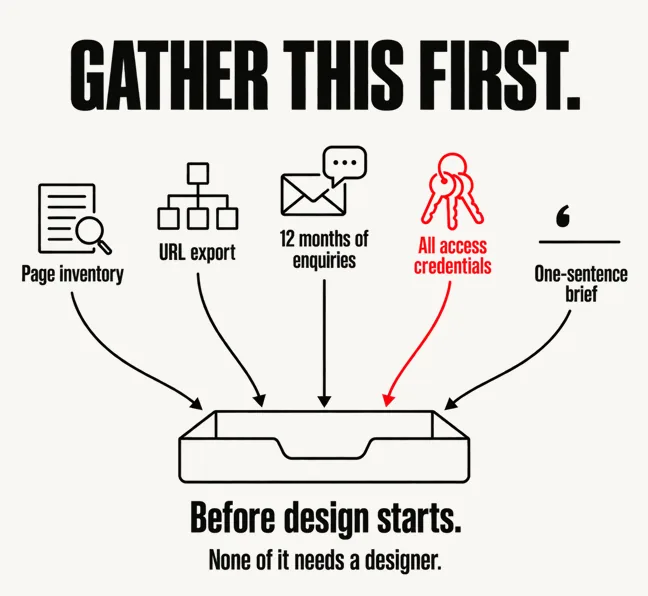
Work through it in order. The first stage is evidence, not design, and it is the one most revamps skip: a revamp keeps the platform, the URLs and the content that already earns, then rebuilds the structure around them.
Two weeks of gathering saves a month of rework, and none needs a designer.
If you are not yet sure a revamp is the right size of job, the nine signs a website needs more than a refresh come first, and the revamp or rebuild decision sits above both.

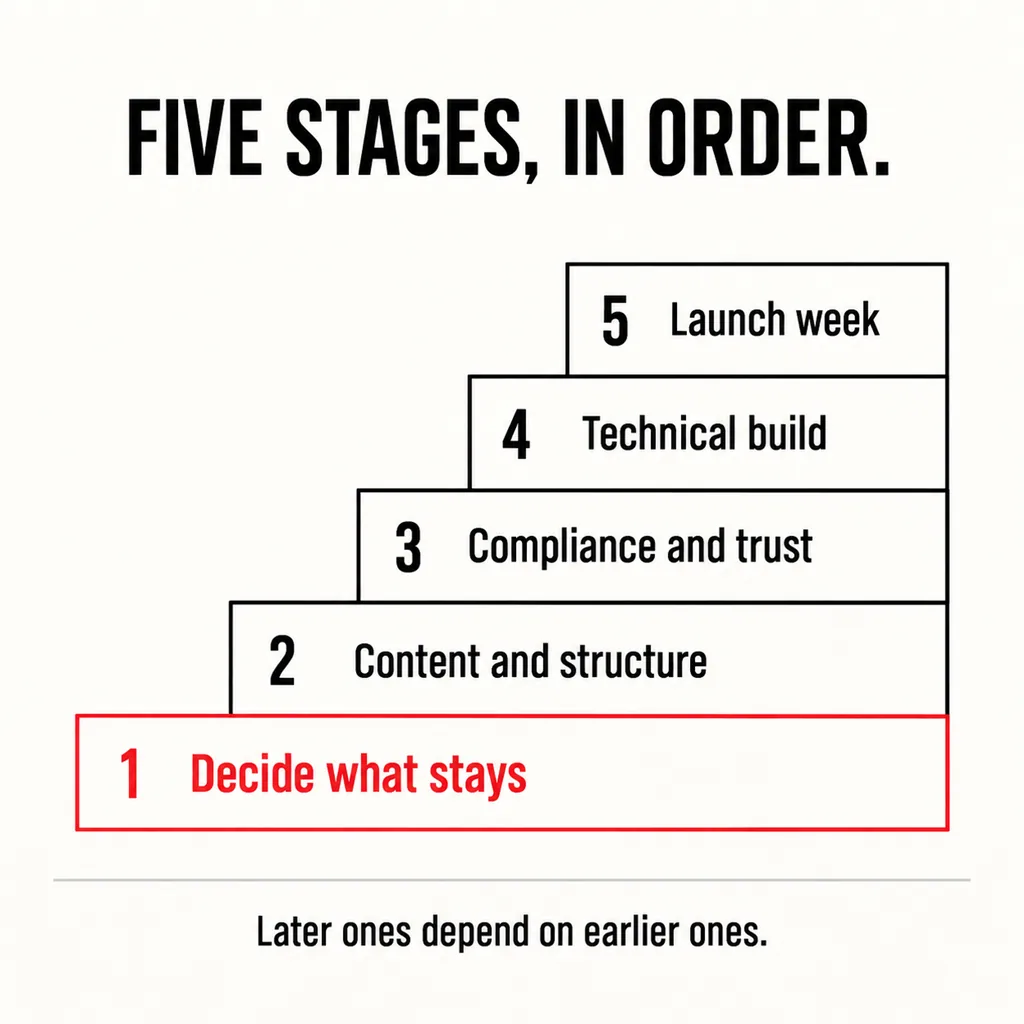
Five stages. Later ones depend on earlier ones, so a team that opens with visual design is working backwards.
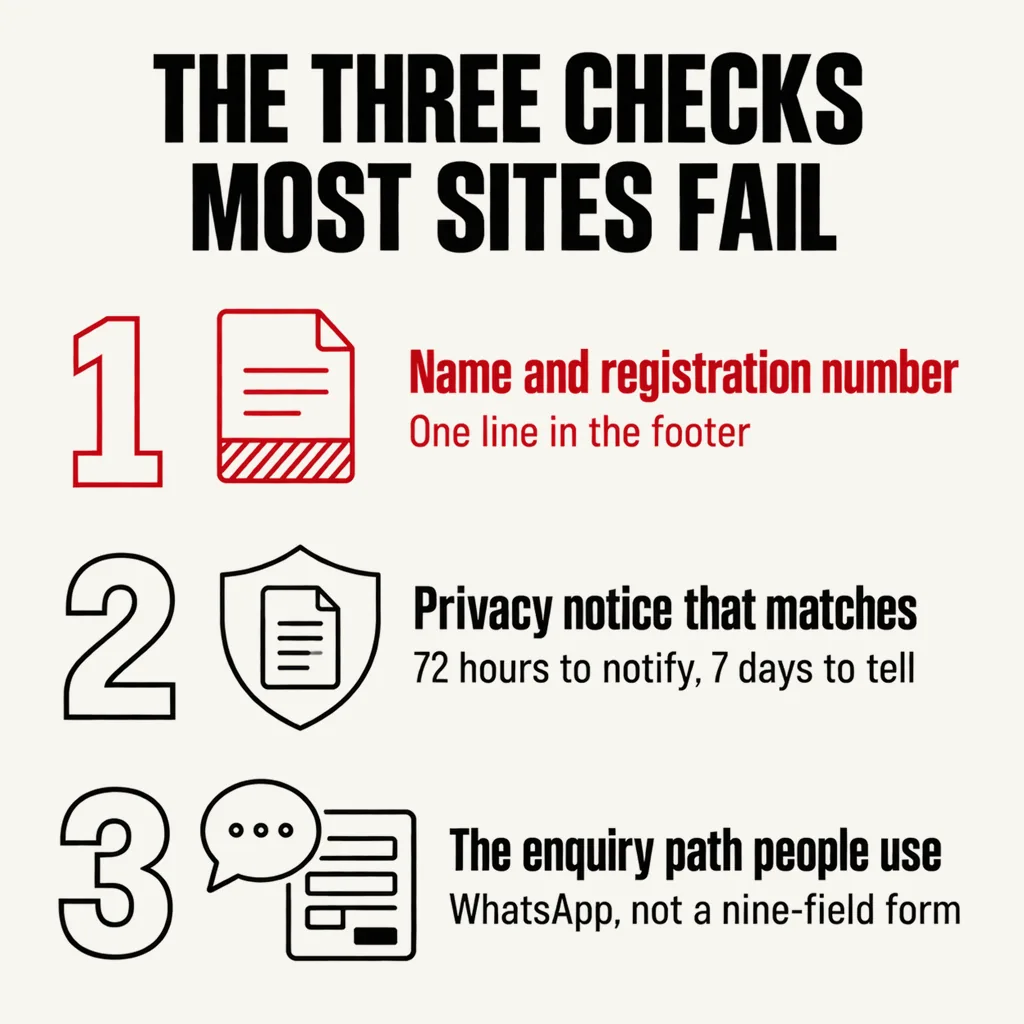
Your registered name and registration number belong on the site. SSM’s amendment to the Registration of Businesses Rules 1957, in force since May 2020, requires an online business to display its name and registration number on its website, its social media and any online marketplace it sells through. Companies under the Companies Act 2016 carry the equivalent duty in section 30, which SSM extended to websites and social media in a notice issued in November 2023. It is one line in the footer, and the omission we find most often.
The privacy notice has to describe what the site really does. Since 1 June 2025 the Personal Data Protection (Amendment) Act 2024 has required a data controller to notify the Commissioner of a personal data breach within 72 hours, and to tell affected individuals within seven days of that notification. Appointing a formal data protection officer is only mandatory above thresholds most SMEs will not reach; the notification duty has no threshold at all. A revamp is the moment to write down what your forms collect and where it is kept.
The enquiry path on the site is rarely the one customers use. Among the Malaysian businesses we work with, most first contacts arrive on WhatsApp while the site still leads with a nine-field form nobody completes on a phone. Match the site to what happens: a WhatsApp link on the right number, a short form for those who prefer one, a tappable phone number, and a way to tell which brought work in.
Prices. What a revamp costs depends on how many pages survive stage one, how much content must be written rather than moved, and how much your own team can absorb. A quote produced before those are known is pricing a package, not a project.
Grants. Malaysia has run matching-fund digitalisation schemes for small businesses for years, and the qualifying vendors, amounts and windows change each budget. Check what is open on MDEC’s grants and initiatives pages before assuming a revamp is part funded, and do not let the grant set the scope.
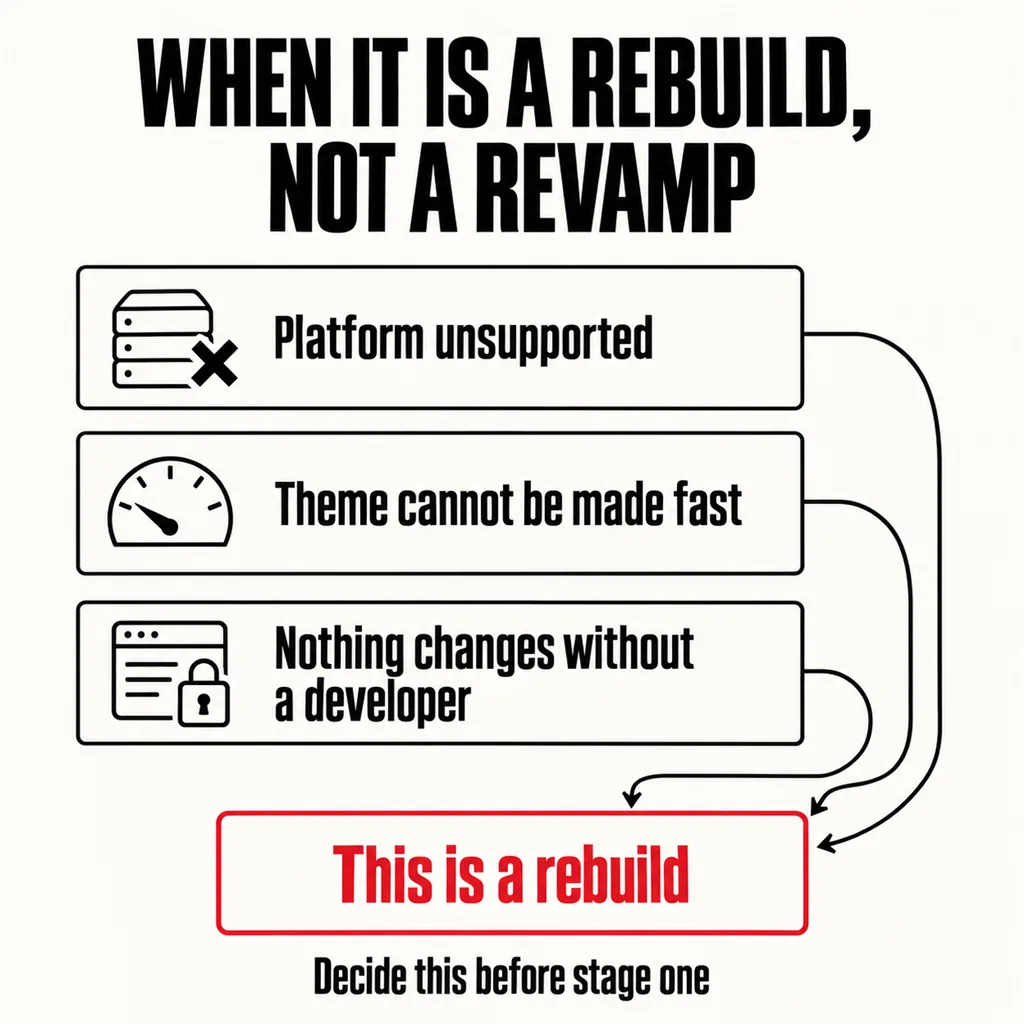
And the point where a checklist stops helping. If the platform is unsupported, the theme cannot be made fast, or nothing can be changed without a developer, this is a rebuild using the old site as a reference rather than a revamp. Our guide to deciding between a revamp and a full rebuild belongs before stage one.
Six to ten weeks is typical for twenty to forty pages, and the variable is rarely design. It is how fast content decisions are made and photographs supplied. Stages one and two are mostly the client’s work; three to five are mostly the agency’s.
Almost never. Keeping URLs that already rank is one of the main advantages a revamp holds over a rebuild. Change one only where the page’s purpose genuinely changed, and redirect it permanently when you do.
Stages one and three, yes: the inventory and the compliance checks take an afternoon each, and doing them makes any quote more accurate. Stage four is where an untrained hand gets expensive, because a missing redirect map is invisible on launch day and obvious six weeks later.
We start a revamp at stage one, because a scope written before the inventory is a guess dressed as a quote. Our web development and design work takes the inventory, the URL export and the enquiry record as inputs and returns a written scope: what stays, what is rewritten, what goes, and what that means for the timeline. If you would rather have that conversation than run stage one yourself, tell us what the site is meant to do.