
- Resources
Innovative Thinking


Your positions have not moved. Your traffic has. That gap has a name: zero-click search, a search that ends on Google’s own results page because an AI Overview, a featured snippet or a business profile already answered it. SparkToro’s analysis of Similarweb clickstream data put it at 68.01% of United States Google searches in the first four months of 2026, against 60.45% in 2024.
For a Malaysian business that is not a reason to stop doing search work. It is a reason to stop reading sessions as the only score. The pages Google quotes are still the pages Google trusts, and the enquiry that follows often arrives by another route: a branded search a day later, a WhatsApp message, a call from someone who already knows roughly what you charge.
A zero-click search is one where the person gets what they came for without visiting anyone’s website: the answer sits in the results page itself. SparkToro counts a search as zero-click when it produces no click at all, setting aside follow-up searches typed into the same box, and separates clicks to Google’s own properties and to advertisers from clicks to the open web. On that measure the share of searches producing at least one click fell by 9.51 percentage points between the two studies.
Two caveats matter before quoting the number in a meeting. The data is United States browser traffic and excludes Google’s mobile app, so it is a directional signal for Malaysia rather than a local measurement, and SparkToro warns against reading its year-on-year comparison too literally because the panels behind each study differ. Search Engine Land’s write-up notes that AI Overviews now appear on more than a fifth of searches, while AI Mode accounted for 0.34% during the period studied.
The result did not lose its ranking. The ranking lost its click.

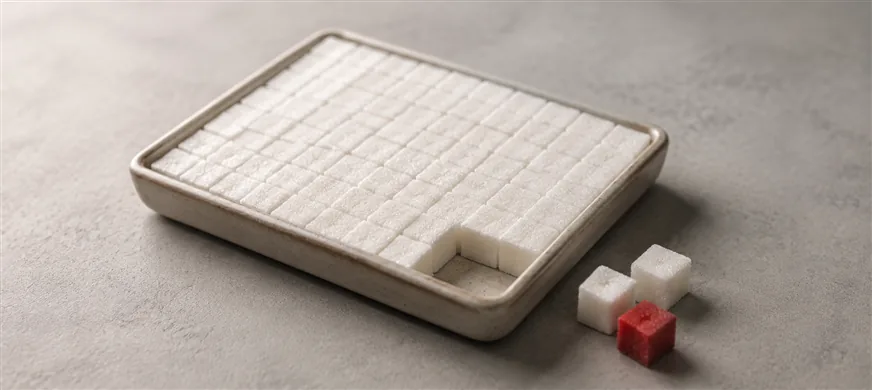
Open Search Console, set the range to sixteen months, switch on both impressions and clicks. A lot of business sites now show the same shape: the impressions line climbing while the clicks line flattens or dips, the two slowly opening apart. Publishers call it the crocodile effect, after the jaws, and it is the clearest sign that the problem is the results page rather than the website.
The pressure is not even across the page. Mike Ryan of Smarter Ecommerce, looking at 175 billion impressions between mid-2025 and mid-2026, found the reverse pattern in Shopping ads: median impressions fell from roughly 1.85 million to 1.4 million while median click-through rate rose from 1.20% to almost 1.55%. His reading, a theory rather than anything Google has stated, is that AI Overviews appear more readily on queries where a click was unlikely anyway. It fits what most owners see: the searches losing clicks are the ones that were only ever curiosity.
Before treating a decline as a penalty, rule out the ordinary explanations.

Not every search is up for grabs. A summary can settle a definition; it cannot settle a decision. Someone comparing quotes, checking whether a firm is real, looking at a portfolio or trying to reach a person still ends up visiting, because the answer they want does not exist in a paragraph. The traffic that survives tends to be the traffic worth having.
Locally the shape is familiar. Someone searching for a supplier in Puchong on a mid-range phone goes to Google Business Profile, then a WhatsApp button, then perhaps your site to confirm you are a real business at a real address. You may see one session instead of three, arriving closer to a decision. If those sessions land and go nowhere, the problem has moved on-site, which is the ground covered in our article on why a website gets visitors but no enquiries.
Search Console does not give AI answers their own scoreboard. Google states that pages appearing in AI features such as AI Overviews and AI Mode are included in the overall search traffic in the Performance report, counted under the Web search type rather than split out. So you cannot filter a clean before-and-after for AI answers, and a fall in clicks on a page whose impressions held is the clearest signal you will get.
The reporting that survives all this is the reporting that was always closer to the business.
Less than the market for AI-optimisation services would suggest. Google’s documentation on AI features says there are “no additional requirements to appear in AI Overviews or AI Mode, nor other special optimizations necessary”, and that you do not need new machine-readable files or markup. What gets a page quoted is what got it ranked: a clear answer, on a page that loads, from a business a reader can identify.
Structuring service pages so they answer the question actually asked is the same work as answer engine optimisation for service pages, and it pays whether the answer lands in a snippet, an AI Overview or a plain blue link.
No. The ranking has to exist before a page can be summarised, quoted or clicked, and the pages Google draws answers from are the ones it already rated highly. What has changed is the reporting: traffic alone no longer describes how visible you are, so enquiries and branded search carry more of the judgement.
Rarely, and not without deciding what you are protecting. Blocking a crawler removes you from the answers it produces; it does not send those searchers to you instead. For most service businesses the citation is worth more than the click it replaced.
Compare impressions with clicks in Search Console over sixteen months, then run the affected queries on a phone while logged out. Rising impressions, falling clicks and an answer box above your listing is the pattern. Falling impressions with a worse average position is a different problem.
Most of the sites we look at after a traffic drop are not broken. They sit behind a results page that answers before they get a turn, and they are measured by a report that counts only one of the ways people arrive. Our SEO and search visibility work starts by separating those two problems: what the results page changed, and what the site was never doing well. The fixes are different, and only one of them is urgent.