
- Resources
Innovative Thinking



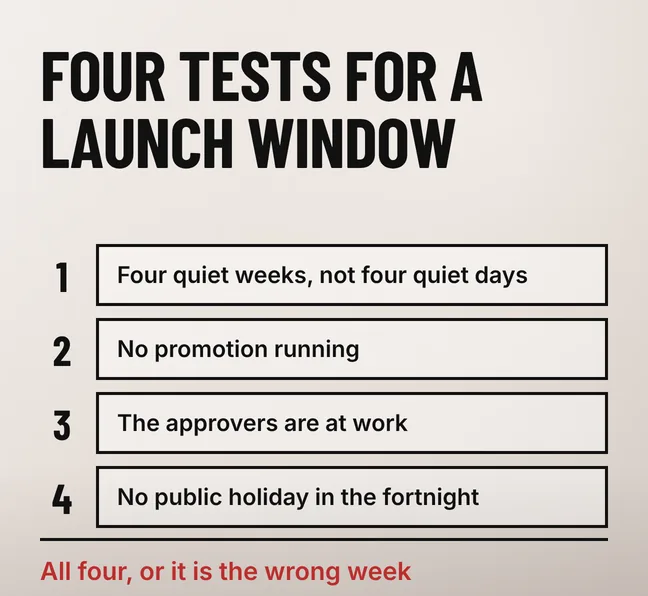
Pick launch day first, in your quietest four weeks, and work backwards from it. Website revamp timing is a trading decision before it is a design decision, because the fortnight after a new site goes live is when forms get tested in anger, old links get re-pointed and search results move around. None of that belongs in the weeks your phone is already ringing.
The quiet stretch has to be four weeks rather than four days, and it has to be quiet for your staff as well as your customers. That leaves most Malaysian businesses two or three realistic windows a year, spaced by Chinese New Year, Ramadan and Raya, Deepavali and the year-end sales.
Go live at the start of four quiet weeks, with the people who answer enquiries back at their desks. Launch day needs the fortnight after it as much as the day itself, so the window has to cover both. Once that date is fixed, everything else in the project is scheduled backwards from it.
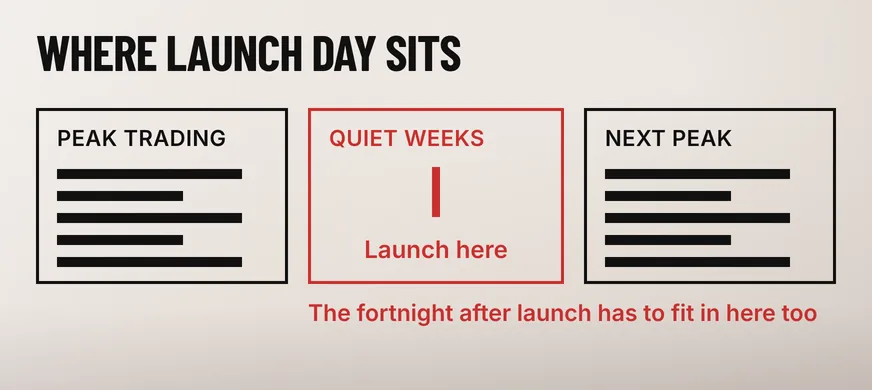
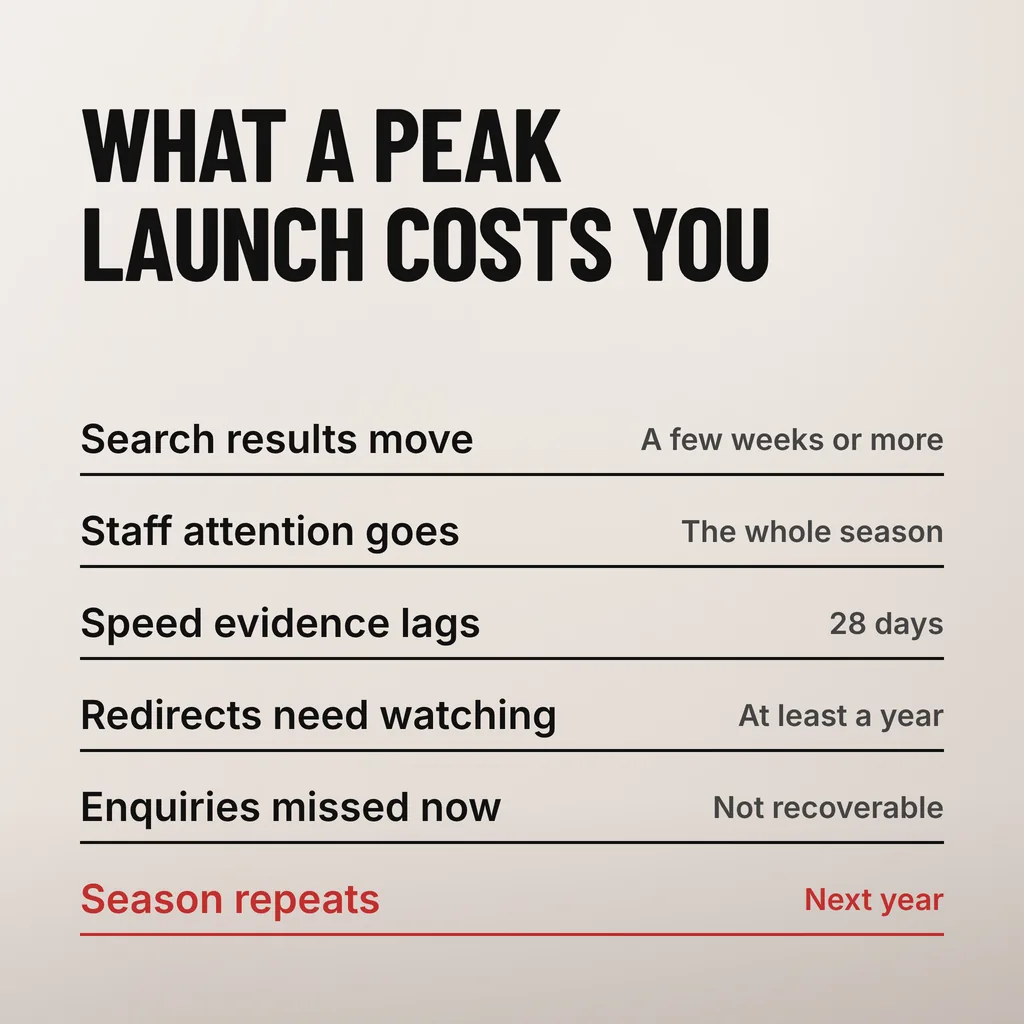
A peak-season launch costs the weeks that pay for your year, and it costs them in three ways at once: search results shift while the new pages are being recrawled, your staff are serving customers instead of checking the site, and the evidence that would tell you whether the launch went well arrives after the season has ended.
Google says this plainly where it documents site moves. Its site-move guidance advises you to “time your move to coincide with lower traffic, if possible”, and adds that “if your traffic is seasonal or dips on certain weekdays, it makes sense to move your site during the recurring traffic dips”. The same page sets expectations on how long the search side takes to settle: for medium-sized sites “it can take a few weeks or more for Google to gradually start showing the new URLs”, and redirects should be kept “for as long as possible, generally at least 1 year”. That guidance applies when the URLs change, which is most revamps that reorganise service pages.
The measurement lag is the part owners rarely price in. Google’s Search Console documentation for the Core Web Vitals report states that the report’s data comes from the Chrome User Experience Report and that its group figures describe what 75% of page requests met or bettered “in the last 28 days”. So if the new site is slower on a mid-range phone than the old one was, the Core Web Vitals report needs most of a month of real visits before it says so. Launch four weeks before your peak and that answer arrives in time to act on; launch into the peak and it confirms the problem once the season is over.
Count back eight to twelve weeks for a fifteen to thirty page site, four to eight for a small one, then add however much of the content is still unwritten. Our published timeline puts only two or three of those weeks on the build itself, so the schedule is mostly decisions, writing and review.
That split is the reason a project started “a month before Raya” lands inside Raya. The build is the predictable part; the copy for six service pages sitting with one busy director is not. How long a website revamp actually takes sets out where the weeks go, including the stages that overlap and the ones that cannot.
| Working backwards from launch day | When it happens | Why it sits there |
|---|---|---|
| Launch day | Week 0 | The first day of four quiet weeks, early in the working week |
| Review and testing | 1 to 2 weeks before | Forms, phones and payment tested by the people who use them |
| Build | 2 to 3 weeks before | The shortest stage, and the only one that looks like work |
| Structure and design | 2 to 3 weeks before that | Needs the content decisions already made |
| Content | 2 to 6 weeks earlier still | Mostly yours, and the stage that slips |
| Audit and decisions | 1 to 2 weeks at the start | What stays, what goes, which URLs change |
Read it from the bottom up: a small site needs its first conversation about eight weeks before the launch window opens, a thirty-page site more like three months. Start later and the choice is to launch into the season or stop mid-project.
Which weeks are quiet depends on who pays you. Retail, food and consumer services peak at Chinese New Year, Raya, Deepavali and the year-end sales, so their usable windows sit between festivals. Firms selling to other businesses are the opposite: those same festive weeks are when approvals stop, which makes them safe to launch in and slow to build in.
Two features of the calendar catch planners out. Ramadan and Hari Raya move about eleven days earlier each Gregorian year, because twelve lunar months run shorter than 365 days, so the window that was comfortable this year is not the same window next year. And the school holidays matter more to a revamp than to trading, because they decide when the person who has to approve the new copy is actually reachable.
A fair test for a retailer is the four weeks after a festival rather than before it: the promotion is finished and nobody needs the site to carry a campaign. For a firm selling to businesses, the question is instead when the decision-makers are all reachable, which is usually mid-quarter.
Keep building and move the launch, not the project. Finish the site, hold the switch until the week after the season, and freeze changes during the peak. A completed site waiting three weeks costs nothing except patience; a launch inside the peak can cost a season of enquiries that never come back.
Where holding everything is not realistic, split it. Google’s site-move guidance suggests you “split your move into smaller steps, if that makes sense for your site”, and for large sites recommends moving one piece first, choosing “a section that changes less frequently and isn’t significantly affected by frequent or unpredictable events”. For small and medium sites it recommends moving all URLs at once instead, and which of those two shapes fits is the subject of revamping in stages against one relaunch.
Usually, yes. Google’s own site-move guidance advises timing a move to coincide with lower traffic and, where traffic is seasonal, moving during the recurring dips. The reason is practical as well as technical: the fortnight after launch needs attention from the same people who are busiest serving customers during a peak.
About eight weeks for a small site and up to three months for a thirty-page one, counting back from the launch date rather than forward from today. Our published timeline is four to eight weeks for a small business site and eight to twelve for a fifteen to thirty page site, and unwritten content is what extends either figure.
Pause the launch, not the work. Building through a festive period is fine, and for business-to-business firms it is often the quietest stretch available. What should not happen in those weeks is the switch-over, because approvals slow down, leave thins out the team, and a problem found on launch day waits for someone to come back.
Most of the timing problem is decided before anyone designs anything, which is why our website revamp service starts by agreeing the launch window and scheduling the content deadlines backwards from it. One thing to do this week: mark your next two trading peaks on a calendar, then count eight weeks back from the gap between them and see whether that date has already passed.