

- Resources
Innovative Thinking


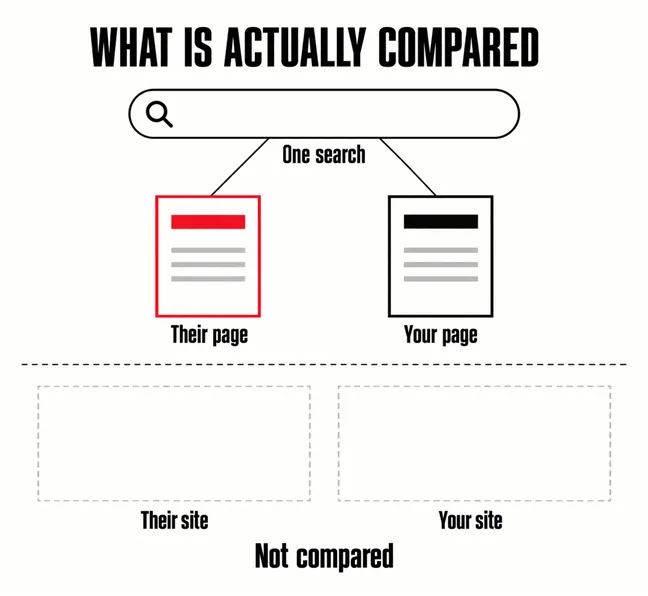
Because search is not comparing the two websites. It is comparing two pages against one query, and the plainer page usually answers that query more directly than yours does. The honest answer to why competitors rank higher than me, from sites that look a decade older than mine, is almost never design. Their page was written about the thing somebody typed. Yours was written about the company.
That is not permission to leave a dated site alone, and it is not a reason to feel better about losing the enquiry. It does mean the diagnosis starts with one search and two pages rather than with a new homepage — which is fortunate, because that is an afternoon of work rather than a project.
Ranking is not a league table of businesses. It is an answer to one query, assembled when somebody asks, and the thing judged is a page. Your competitor is not above you in any general sense: one of their pages sits above one of yours for one search, and there are usually other searches where the order reverses.
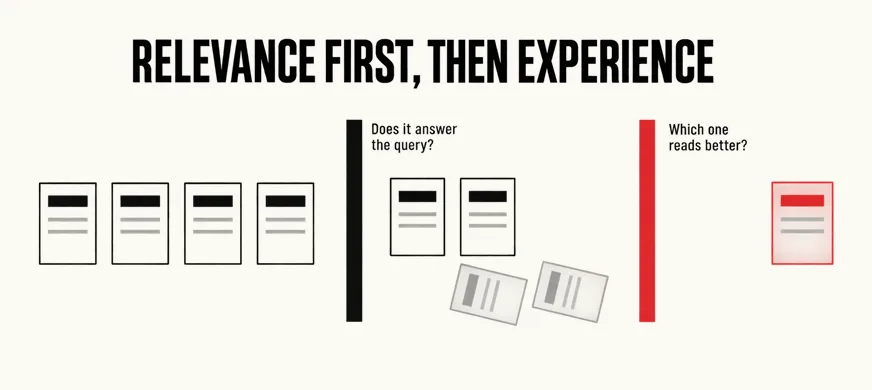
Relevance is the entry requirement. Polish is not. Google puts it flatly in its page experience documentation: “Google Search always seeks to show the most relevant content, even if the page experience is sub-par.” The same page says where design does count — “for many queries, there is lots of helpful content available. Having a great page experience can contribute to success in Search, in such cases.” Experience separates pages that already answer the question. It does not get a page into the running.
So the plain page that answers beats the handsome page that introduces. Google’s own quality guidance even asks it comparatively: does the content provide substantial value when compared to other pages in search results? Not whether your page is good — whether it beats the other answers on the screen.
Open the competing page and you can settle it in a minute. Theirs names things: what a job costs and what moves the figure, how long it takes, what is excluded, which areas they serve. Yours says the business is experienced, professional and committed to quality. Both are true. Only one is an answer.
Their page is not better made than yours. It is about the question, and yours is about the business.
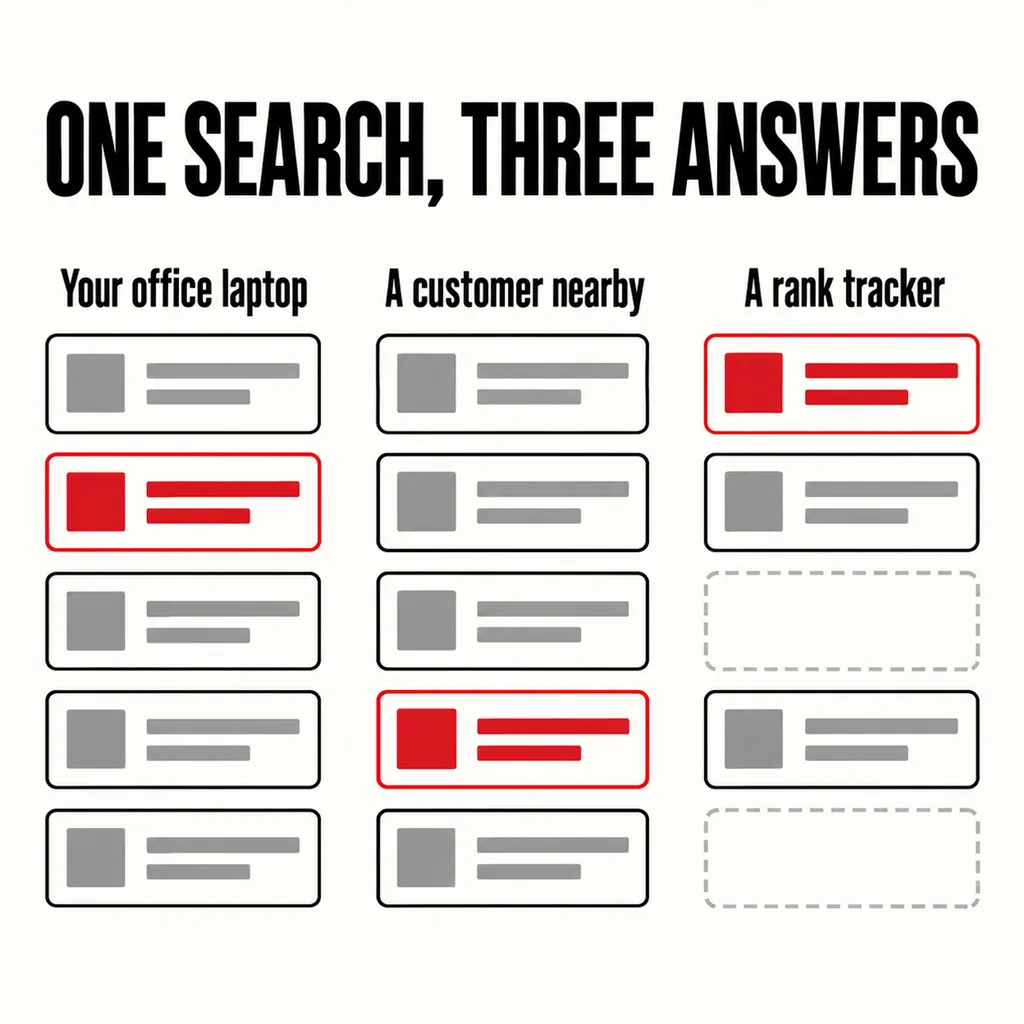
Before diagnosing anything, check that the ranking annoying you is real. Two things make the position on your own screen weak evidence, and one of them is specific to this month.
The first is that there is no single result page to be ranked on. Google says relevance is determined by hundreds of factors, “which could include information such as the user’s location, language, and device (desktop or phone)”, and its explanation of ranking adds “your location, past Search history, and Search settings”. Searching your own keyword from your own office, signed in, on the machine that has visited your site a thousand times, is the least representative search anybody could run.
The second is that third-party rank trackers are currently unreliable. Since around 13 September 2026 Google has been blocking search scrapers and tracking tools effectively enough that the data coming back is thin or stale: Nozzle reported an 80% drop in what it could collect, and Sistrix’s status page acknowledged that Google “made further changes to the way search results are delivered”. Barry Schwartz’s warning is the right posture for any September ranking report — “just be careful when looking at the data from these tools, they might be wrong.”
The version that still works costs nothing. Open Search Console, filter the performance report to the exact query, and read your average position and impressions over the last three months. That is first-party data from searches real people ran, and this month it is the only ranking number worth arguing from. If the query does not appear at all, you have your answer: the page is not competing, it is absent.
Once the gap survives that check, the causes are almost always mundane, and none of them is “their web designer is better than mine”.
This is a page-level investigation. It needs no tool, no budget and nobody’s permission.
If the same gap turns up on the third and fourth query you check, the problem has stopped being a page and become a structure — pages that do not exist, navigation that hides the ones that do, templates nobody can add to without a developer. That is a revamp, and worth quoting properly. If instead competitors keep being quoted in AI answers while you are not, the surfaces have changed rather than the ranking, and our explainer on the difference between SEO, AEO and GEO covers what that requires.
On its own, rarely. Looks are not what puts a page into the running, though they matter once several pages answer the question equally well. The changes that move a position are the unglamorous ones: a page written for a search that never had one, a question answered plainly instead of hinted at, a page that loads before the visitor gives up.
Not in the way the question assumes. Speed and page experience are considered, but they do not outrank relevance: a slow page that answers the question can sit above a fast page that does not. And “badly built” is a judgement from somebody who builds websites — a plain page on a phone often behaves better than a designed one.
Use Search Console rather than a rank tracker, especially this month, and filter to the exact query. Third-party tools have been returning incomplete data since Google tightened up on scrapers in mid-September 2026. Your own impressions and average position are first-party and unaffected.
More often than not, when we are shown a competitor’s site and asked to beat it on design, the design was never the reason. Our SEO service starts from the queries that actually matter to the business, reads what currently wins them, and says plainly whether the answer is three pages of work or a structural revamp. Sometimes it is neither. As Google puts it in its own starter guide, “there are no secrets here that’ll automatically rank your site first in Google” — but there is usually a specific, boring, findable reason you are second.