
- Resources
Innovative Thinking


Does blogging still work for business? Yes, but not the kind of blogging most small businesses were sold. The posts that used to pull in traffic — definitions, tip lists, “what is” explainers — are exactly the ones Google now answers on its own results page. The posts that still bring in work are the ones a summary cannot write: what your jobs cost and why, what you have learned doing them, and the answers to the questions customers already send you on WhatsApp.
That changes what to write, how often and what to count. It does not change why a business blog exists: to answer a buyer’s question before they ask a competitor.
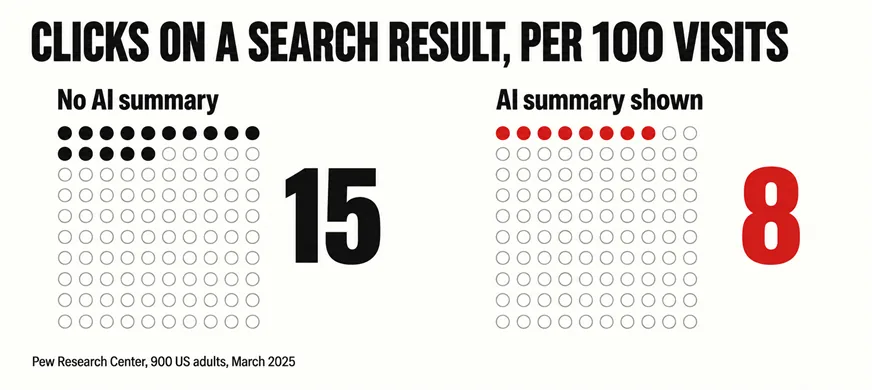
The cleanest measurement comes from Pew Research Center, which tracked the actual browsing of 900 American adults through March 2025. Users who encountered an AI summary clicked on a traditional search result link in 8% of all visits. Without a summary, it was 15%. And the searches most likely to get one were the searches blogs were built for: 60% of those beginning with who, what, when or why produced a summary, against 8% of one- or two-word searches.
Pew was watching, not testing. A preregistered field experiment with 1,100 Google users, posted in August 2026, did test it, and found that removing AI Overviews and AI Mode increases click-through rates to publishers. Take the summary away and people click through again. Publishers are already feeling it: Chartbeat, whose data skews toward news and media publishers, measured a 40.2% fall in Google Search referrals across its network between July 2025 and July 2026.
Bloggers have noticed. Orbit Media’s 2026 survey of 1,042 content marketers found that 13.9% say their blog delivers strong results, an all-time low. And it was never true that every post earned. Looking at about 14 billion pages in 2023, before AI summaries were common, Ahrefs reported that “96.55% of all pages in our index get zero traffic from Google”.
These are American and publisher figures, so read them as direction rather than a Malaysian measurement. The direction is clear enough: the generic post was already a long shot, and the summary has lengthened the odds. What that does to your search reporting is covered in our piece on zero-click search and why rankings can hold while traffic falls. What it does to your blog is the rest of this article.
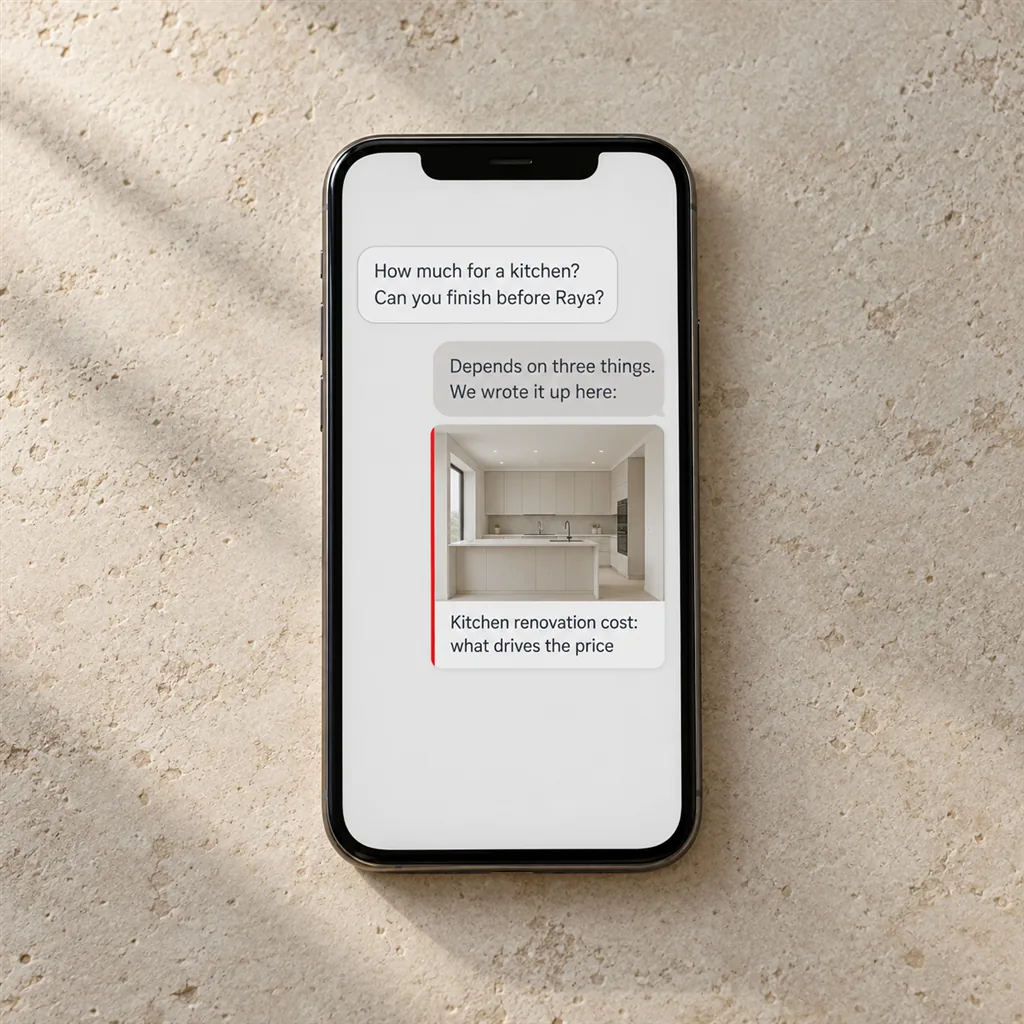
A summary can explain what a renovation involves. It cannot say what yours will cost, or whether you can finish before Raya.
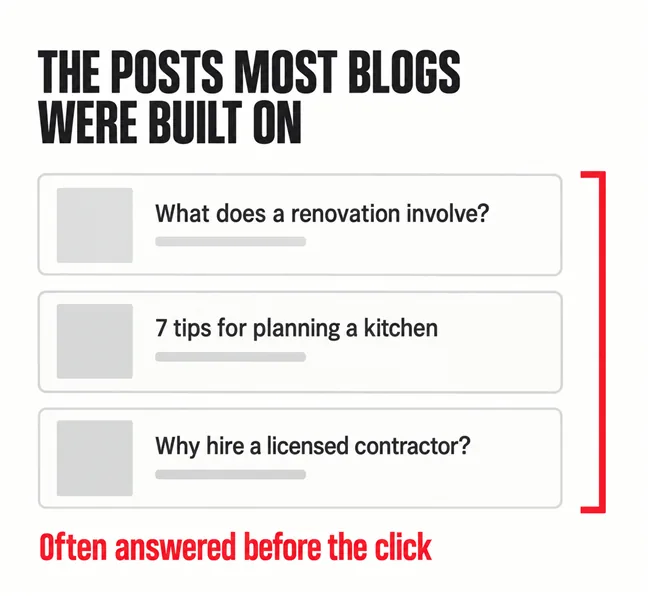
Google’s first tip for doing well in its AI search features fits in one sentence: Focus on making unique, non-commodity content that visitors from Search and your own readers will find helpful and satisfying. Non-commodity is the useful word. A commodity post is one any competitor, or any AI tool, could write without knowing anything about your business. Those are the posts losing their clicks. The ones still earning share one trait: they contain something only you know.
| Type of post | What happens to it now | Keep writing it? |
|---|---|---|
| Definitions and general tips | Answered on the results page; the click often never comes | Rarely |
| Trend and news round-ups | A few weeks of attention, then nothing | Only when customers must act on it |
| What a job costs and why | A summary cannot know your numbers | Yes |
| Comparisons from your own work | Needs experience a summary does not have | Yes |
| Answers to questions customers already ask you | Earns in search, and again each time your team sends it | Yes, first |
| Project write-ups | Proof at the moment someone is choosing | Yes |
Scroll back through a month of WhatsApp enquiries and calls. The same eight or ten questions come up: how much, how long, do you cover my area, what happens if something goes wrong. Each deserves a post that answers it properly, with the caveats a good salesperson would give. That post earns twice: in search, from people asking it who have not found you yet, and every time your team pastes the link into a reply instead of typing the same explanation for the fortieth time.
Price is the question every business blog dodges and every buyer asks. You do not need a package price to answer it. A post that explains what drives the cost, gives the range you actually see on your jobs and shows why one quote can come in at twice another is the most useful page a prospect will read, and one a summary cannot write, because the numbers are yours. Google’s self-assessment asks: “Does the content provide original information, reporting, research, or analysis?” Your job records are original research, even if nobody has called them that.
The third kind is judgement: repair or replace, this material or that one, do it now or wait a year. Google’s people-first questions ask whether your content does clearly demonstrate first-hand expertise and a depth of knowledge. A post that says “we have done enough of these to know when it is not worth it, and here is how to tell” clears that bar. A post that lists pros and cons from the first page of Google does not.
Much of what a good post earns never shows up as a blog visit that ends in a form. Someone reads your cost post on their phone at night and messages you two weeks later asking for a site visit. Your salesperson sends the repair-or-replace post to a hesitant customer, who reads it and books. Neither is credited to the blog. Chartbeat’s advice to news publishers holds for a business too: treat SEO as just one channel among several. A business blog is also a sales tool, and the thing you send instead of a brochure.
So measure it the way it actually works:
None of this is precise, and at small-business volumes it never will be. Five enquiries a month is too few for tidy statistics, but enough to see which three posts keep coming up, and that is the decision you actually need to make.
Less often than you were told, and never to hit a number. Among the questions Google lists as signs of search-engine-first content is this one: “Are you producing lots of content on many different topics in hopes that some of it might perform well in search results?” A publishing calendar that demands two posts a week, whatever you have to say, is a machine for producing exactly that.
Orbit Media puts the average post at 3 hours, 20 minutes of writing. A post built from your own jobs takes longer, because someone who does the work has to supply the substance. For most small businesses that makes one good post a month a realistic pace, and a better use of the time than four thin ones. Two jobs matter more than volume:
Sometimes the honest answer is to stop, or not to start. A blog is unlikely to earn if:
No, but the version built on volume is struggling. Generic posts written to catch search traffic are losing clicks to AI summaries, and fewer bloggers than ever report strong results. Posts that carry first-hand knowledge, such as your costs, your comparisons and your answers to real enquiries, still bring in work, often through routes that analytics does not credit to the blog.
It can help with the parts that are not the point. Google says generative AI can be particularly useful for researching a topic and adding structure to original content, and that generating many pages without adding value for users may breach its spam policy on scaled content abuse. Orbit Media found that none of the ways bloggers use AI correlated with better results. What earns in a business post is your numbers, your jobs and your judgement, and an AI tool has none of them unless you supply them.
There is no reliable figure, and many posts never rank at all. A post your team sends to customers can earn the same week it is published. One that relies on search usually needs months, and some never get there. Judge each post over a year, by the enquiries that mention it, rather than by its first month of visits.
A typical small-business blog has the same shape: a burst of generic posts from a few years ago, a long gap, and two or three posts quietly doing all the work. Our SEO and search visibility service starts there: which posts earn, which to merge or retire, and which questions from your own enquiries deserve a proper answer next, so the hours spent writing go into posts that can still bring in work.